

Images are for illustration purposes only.
Living with Pulmonary Arterial Hypertension1

Navigating life with pulmonary hypertension (PAH) starts with understanding how it can affect various aspects of your health.
PAH occurs due to the narrowing of arteries in the lungs, restricting the flow of blood through the lungs and raising the blood pressure in the lungs. As a result, people with PAH can experience symptoms like tiredness, shortness of breath, chest pain, dizziness, and an irregular heartbeat.
Images are for illustration purposes only.
Since PAH is a rare condition, you may need certain tests to help rule out other diseases before you get your official PAH diagnosis. In addition, having PAH can make people feel like their lives have been turned upside down.
To help you cope with various ways in which PAH affects you, consider whether to include additional health care professionals, such as a counsellor or therapist, to your care team. Remember, support to help manage your PAH is available.
PAH by the numbers
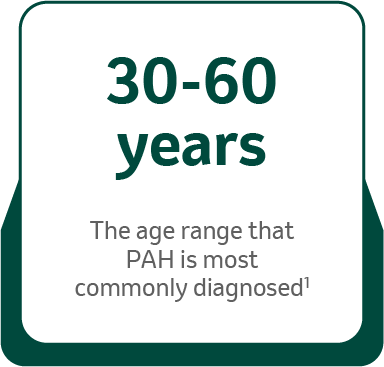
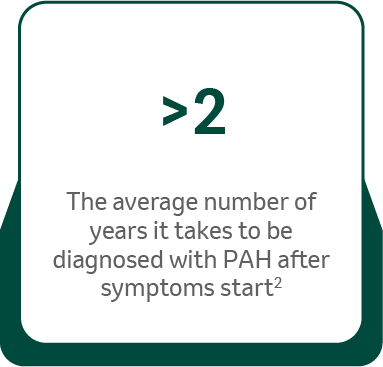
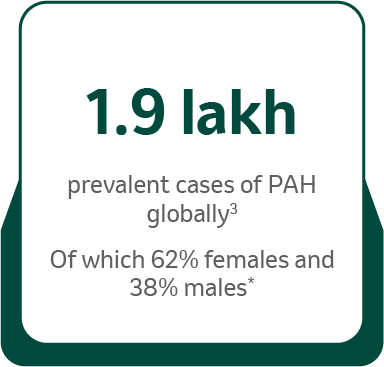
*As per the Global Burden of Disease Study, Pulmonary Arterial Hypertension Collaborators; 2021.
This study reports the global burden of PAH, leveraging all available data and using methodology of the Global Burden of Diseases, Injuries, and Risk Factors Study (GBD) to understand the epidemiology of this under-researched and morbid disease.
Confirming a diagnosis of PAH2,4
Having a confirmed PAH diagnosis is important. However, getting an official diagnosis can sometimes take over two years because some symptoms are similar to other common lung diseases, like asthma and chronic obstructive pulmonary disease (COPD). The sooner the diagnosis is confirmed, the sooner you and your care team can put together a comprehensive, interdisciplinary plan to help manage it.
– Blood tests
– Lung function tests
– Echocardiograms (scans that create pictures of your heart)
– Right-heart catheterization (a test that measures the pressure inside your pulmonary arteries)

Images are for illustration purposes only.
The right-heart catheterization is the only test that can confirm a PAH diagnosis and tell doctors how severe your PAH is.
Your care team will run routine tests to assess your PAH over time. These tests may involve heart imaging and exercise capacity assessments, such as the 6-minute walk distance test.2,4
WHAT TO WATCH FOR1
In the early stages of PAH, you may not notice any symptoms at all. As the disease progresses, you will start to experience symptoms common to other lung diseases. The most common symptoms of PAH are:

Shortness of breath1

Fatigue1

Edema, or swelling of the feet, legs and eventually the abdomen and neck1

Dizziness and fainting spells1

Chest pain1

Heart palpitations (racing or pounding)1

Lips and fingers turning blue1
If you are experiencing these symptoms, you should contact your doctor.
This is an educational initiative brought to you by MSD India. For more information about PAH, its symptoms and other queries, please consult with your doctor.
If you want to report an adverse experience related to an MSD product, email us at dpoc_india@msd.com
You can also contact us at Tel: 18001032642; Fax: 1244647339
Images are for illustration purposes only.
Issued in public interest by MSD for General awareness and educational purposes. It does not constitute medical advice. Readers are required to consult their medical practitioner before acting on any advice herein.
References:
- American Lung Association: Learn about PAH. Available from: https://www.lung.org/lung-health-diseases/lung-disease-lookup/pulmonary-arterial-hypertension/learn-about-pulmonary-arterial-hypertension [Accessed on 2/2/2026].
- American Lung Association: Symptoms and Diagnosis. Available from: https://www.lung.org/lung-health-diseases/lung-disease-lookup/pulmonary-arterial-hypertension/symptoms-diagnosis [Accessed on 2/2/2026].
- GBD 2021 Pulmonary Arterial Hypertension Collaborators. Global, regional, and national burden of pulmonary arterial hypertension, 1990-2021: a systematic analysis for the Global Burden of Disease Study 2021. Lancet Respir Med. 2025 Jan;13(1):69-79.
- Pulmonary Hypertension Association: Diagnosis. Available from: https://phassociation.org/pulmonary-hypertension/diagnosis/ [Accessed on 2/2/2026].
- Lynn H, Wilson M. Why Living with Pulmonary Arterial Hypertension Requires a Holistic Approach: A Patient and Clinician Perspective. Pulm Ther. 2023 Mar;9(1):1-13.